
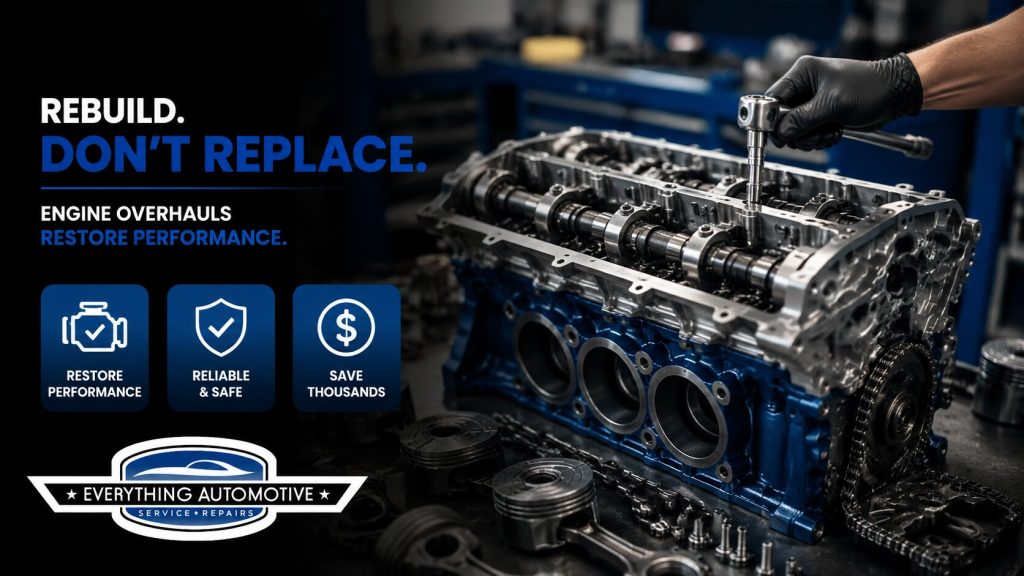
Rising car prices and high interest rates make rebuilding an existing engine a highly sustainable and practical alternative to buying new. Professional engine overhauls restore high mileage vehicles to peak performance, allowing Jacksonville drivers to bypass steep dealership depreciation while keeping a structurally sound and reliable vehicle on the road.
Rising Vehicle Costs and High Interest Rates Challenge Duval Drivers
Northeast Florida drivers shopping for a vehicle face a challenging retail market. The average price of a new car has climbed to a staggering $49,714. High borrowing costs complicate the purchase, with new-car loan interest rates averaging 7 percent and used-car rates sitting near 12 percent. For the average Jacksonville buyer, this translates to an average monthly payment of $773, a figure that does not account for the high cost of full-coverage auto insurance on a brand-new asset. Even used cars offer little financial relief, with the average used vehicle price hovering around $25,390.
When you buy a brand-new vehicle, it suffers from immediate and steep depreciation, commonly losing 20 to 30 percent of its initial value within the first two to three years. If your current vehicle is structurally sound, with a solid frame and body, throwing it away simply because the engine is tired is a massive waste of a perfectly good chassis.
By investing a fraction of the cost of a new car to rebuild your original engine block, you avoid the heavy financial burden of dealership markups, front-loaded depreciation, high sales tax, and elevated insurance premiums, ensuring you keep a reliable vehicle on the road without taking on years of debt.
The Mechanics of Engine Wear and How Compression Fades Over Time
As your vehicle crosses the 100,000-mile mark in Duval County, years of extreme summer heat and heavy stop-and-go commuting begin to take a physical toll on internal engine components. Driving along major expressways like J. Turner Butler Boulevard (JTB), where the posted speed limit is 65 mph, imposes significant thermal-expansion stress and high-load demands on your engine. Over time, these continuous operational stresses degrade internal clearances, which we track across these critical failure points:
| Engine Component | Primary Wear Mechanism | Operational Impact and Performance Loss |
| Cylinder Bores | Continuous upward and downward motion of the pistons causes the steel walls to wear unevenly and lose their cross-hatch hone. | If a cylinder wears out of round by over 0.003 inches or is 0.005 inches oversize, the piston rings cannot expand uniformly to maintain a proper seal. |
| Piston Rings | Blow-by gases escape past the compromised compression rings, while worn, thin-walled oil control rings fail to scrape the cylinder walls clean. | Raw, unburnt fuel washes past the rings, diluting the motor oil, while excess engine oil slips upward into the combustion chamber, causing blue smoke. |
| Crankshaft Bearings | In our 70% average relative humidity, condensation combines with fuel-diluted oil to create corrosive sulfuric and nitric acids, attacking soft-metal main and rod bearings. | This chemical corrosion eats away at the bearings, expanding clearances, destroying the protective oil film, and dropping system oil pressure. |
| Oil Screen and Passages | Trapped, fuel-diluted oil and atmospheric water oxidize and polymerize into a thick, black carbonaceous sludge under extreme engine operating temperatures. | This sludge settles in the oil pan and clogs the oil pump pickup screen, starving the engine’s top end. |
Finding the True Source of Power Loss with Advanced Diagnostic Tools
I have been turning wrenches since 1983, and I can tell you that diagnosing a tired engine requires rigorous physical measurements, not generic code-scanner guesswork. At Everything Automotive, we use a systematic series of mechanical tests to evaluate the health of your engine before recommending any major repairs:
- Cranking Compression Test We thread a calibrated compression pressure gauge into each spark plug hole and crank the engine. A healthy engine should produce consistent pressure between 120 and 150 PSI, with less than 10 percent variation between the highest and lowest reading cylinders.
- Cylinder Leakdown Test If a cylinder shows low compression, we perform a leakdown test. We rotate the engine to place the specific piston at Top Dead Center (TDC) on its compression stroke with both valves fully closed. We then inject steady, pressurized shop air into the cylinder and measure the percentage of pressure loss on our leakdown gauge.
- Diagnostic Leakdown Benchmarks A leakage rate of 5 to 10 percent indicates a healthy, properly sealed engine. A leakage rate of 15 to 20 percent points to moderate, early-stage wear. However, if the leakdown rate exceeds 30 percent, the engine has major sealing failures and requires an overhaul.
- Isolating the Leak Path By listening to where the injected air is escaping, we can pinpoint the exact mechanical failure without tearing down the engine. Hissing from the oil filler cap or dipstick tube confirms worn piston rings. A gushing sound from the throttle body indicates a leaking intake valve, while hissing from the tailpipe confirms a leaking exhaust valve. Air bubbling out of the radiator neck confirms a blown head gasket or a cracked cylinder head.
- The Glitter Test We unbolt the oil filter and use a specialized, non-shearing cutter to unroll the pleated filter paper. We inspect the paper under bright light for fine, shimmering metallic flakes—often referred to in the industry as the ‘glitter test’—to verify if the main and rod bearings have begun to break down.
Rebuilding the Original Engine Block Versus Buying a Cheap Salvage Motor
Many generic repair shops or junk-yards will try to convince you to install a cheap, “salvage” used engine to save money. This is an incredibly risky gamble. Used salvage engines have unknown maintenance histories, may have sat exposed to damp coastal air for months, and often suffer from dried-out rubber seals and gaskets that will spring major leaks shortly after installation.
At Everything Automotive, we believe in doing things the right way, with the right parts and tools. Our master-tech engine overhaul is a complete, high-quality remanufacturing of your vehicle’s original power plant:
- Bare Block Teardown We strip your engine down to the bare castings, cleaning every component to remove baked-on carbon and sludge.
- Precision Machining We send the block and cylinder head to a specialist machine shop where the block is machined flat and the cylinders are bored and honed with a fresh, 45-degree cross-hatch pattern to ensure perfect ring seating.
- Premium Component Upgrades We replace all wear items with premium parts, including brand-new pistons, rings, rod and main bearings, timing components, oil pump, and premium seals and gaskets.
- Meticulous Assembly We measure and verify every internal clearance using precision micrometers and plastigage, ensuring your rebuilt engine meets or exceeds original factory specifications.
Sustained Long Term Value and Roadside Peace of Mind
Once your engine is completely overhauled, keeping it healthy in Jacksonville’s brutal heat is simple. We highly recommend utilizing premium full-synthetic oils. Synthetic lubricants possess superior thermal and chemical stability, allowing them to resist oxidation and prevent the fuel-dilution and sludge buildup that destroys bearing surfaces in hot, stop-and-go city traffic. Additionally, under severe stop-and-go driving, you must shorten your oil change intervals to 3,000 to 5,000 miles to flush out combustion contaminants before they can damage your new bearings.
Before taking on years of expensive new car debt, contact the master-tech team at Everything Automotive of Jacksonville, Inc. to discuss a sustainable engine overhaul, and to restore your high-mileage vehicle’s reliability and lifespan today.
- Visit us at our Eastside location (7624 Beach Blvd, Jacksonville, FL 32216 | 904-800-2714)
- Our Westside location (6211 Blanding Blvd, Jacksonville, FL 32244 | 904-813-7097)
Frequently Asked Questions
Is a cylinder leakdown test more accurate than a standard compression test?
Yes. While a standard compression test only measures the engine’s ability to produce pressure during cranking, a cylinder leakdown test injects pressurized air into the cylinder to measure the exact percentage of leakage and isolate where pressure is escaping.
Can excessive bearing wear cause low oil pressure at a hot idle?
Yes. When internal crankshaft bearing clearances expand beyond manufacturer specifications due to wear, oil escapes too easily from the sides of the bearings, dropping the hydraulic resistance that generates system pressure.
Will buying a salvage used engine save me money compared to a professional overhaul?
No. While a salvage engine has a lower upfront cost, it carries a high risk of hidden internal sludge, worn seals, and unknown history, whereas a professional overhaul restores your original block to factory-new tolerances.
