
A failing Honda CR-V or Pilot blower motor can cause weak airflow, strange noises, or intermittent fan operation. Diagnosis requires testing motor current draw, voltage drop, and HVAC components to identify whether the issue is the blower motor, control module, wiring, or airflow restriction.
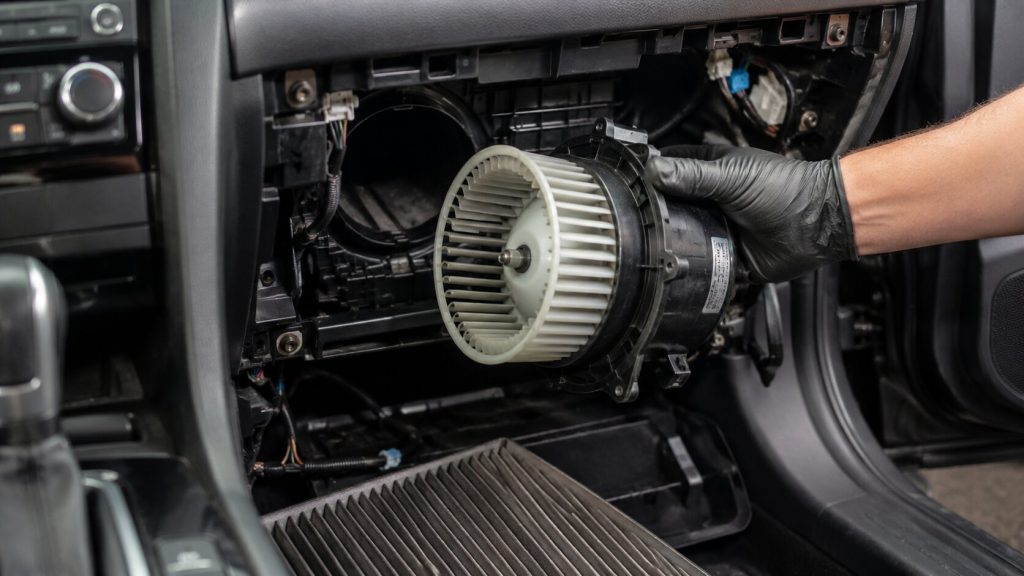
Why is my blower motor losing airflow?
A failing Honda blower motor usually causes weak airflow, inconsistent fan speeds, unusual noises behind the glovebox, or complete loss of cabin air movement. In Jacksonville’s humid summer conditions, blower motors often fail because years of heat cycling, moisture exposure, restricted cabin filters, and electrical overload increase stress on the HVAC system.
At Everything Automotive, the diagnosis process focuses on testing the blower motor’s current draw, checking voltage drop at the speed controller, and inspecting the HVAC system before recommending replacement parts.
Honda Blower Motor Failure Quick Facts
| Diagnostic Area | Finding |
| Common Symptoms | Weak airflow, intermittent fan operation, whistling, grinding, or growling behind the glovebox |
| Common Vehicles | Honda CR-V and Pilot models with aging HVAC components |
| Primary Components Tested | Blower motor, power transistor/resistor module, electrical connectors, cabin air filter |
| Diagnostic Tools | Digital clamp meter, multimeter, thermal imaging camera |
| Environmental Stress | Jacksonville humidity, high cabin temperatures, condensation cycles, heavy commuter traffic |
Why Jacksonville Conditions Can Accelerate HVAC Blower Problems
A Honda CR-V or Pilot blower motor sits behind the glovebox and pulls air through the cabin filter before pushing it across the evaporator core into the passenger compartment.
During Jacksonville summers, the HVAC system operates under heavier demand because of high temperatures and humidity. The evaporator repeatedly removes moisture from the air, creating condensation cycles inside the HVAC housing.
Over time, inspections commonly reveal:
- Damp or restricted cabin air filters
- Dust and pollen buildup inside the blower housing
- Heat-damaged blower motor connectors
- Increased blower motor amperage caused by internal wear
A restricted cabin filter does not automatically cause blower motor failure, but reduced airflow can increase operating stress and heat around the blower assembly.
Jacksonville vehicles often experience repeated moisture cycles from summer humidity, heavy rain, and temperature swings between hot exterior conditions and cold A/C operation. Over time, these conditions can contribute to damp cabin filters, corrosion at electrical connections, and additional stress on HVAC components that already have years of use.
How Honda Blower Motor Problems Are Diagnosed
When a Honda arrives with weak airflow, the first step is determining whether the issue is caused by a mechanical problem, electrical fault, or a combination of both.
The diagnostic sequence starts with a basic airflow inspection and moves toward electrical testing:
- Inspect the cabin air filter
- A restricted or damp filter can reduce airflow and should be replaced before continuing diagnosis.
- Measure blower motor current draw
- Normal current draw points toward checking the control module, HVAC doors, or airflow restrictions.
- Excessive current draw indicates possible blower motor wear, internal resistance, or connector damage.
- Test the blower motor control module
- Voltage drop testing confirms whether the module, wiring, or electrical connections are contributing to the failure.
This process prevents replacing the blower motor, resistor, or control module without confirming the actual source of the problem.
Honda Blower Motor Diagnostic Method
Cabin Filter and Mechanical Inspection
The first inspection begins with the cabin air filter.
The filter is checked for:
- Moisture saturation
- Excessive debris
- Leaf material
- Airflow restriction
The blower wheel is then inspected manually.
A healthy blower motor should rotate smoothly without excessive resistance. Grinding sounds, bearing drag, or contact marks inside the housing indicate possible internal motor wear.
Measuring Blower Motor Current Draw
Current testing helps separate a failing motor from a control module problem.
Typical operating measurements:
- 7–9 amps: Normal operating range
- 13–18 amps: Excessive load requiring additional inspection
When current draw is elevated, the next step is determining whether internal motor wear, electrical resistance, or connector damage is creating the problem.
Replacing only the blower resistor or transistor without correcting excessive motor load can lead to repeat failure.
Testing the Blower Motor Control Module
Many Honda models use a power transistor module instead of a traditional resistor.
Voltage drop testing helps identify:
- Internal module failure
- Poor electrical connections
- Heat-damaged terminals
A damaged connector is usually the result of excessive heat and current over time.
Honda HVAC Failures
When diagnosing Honda CR-V and Pilot blower complaints, the first priority is measuring what the system is doing before replacing components.
A common failure pattern is:
The blower motor develops internal resistance from wear, current demand increases, heat builds at the connector or control module, and the vehicle eventually loses fan operation or becomes limited to certain speeds.
Testing the entire circuit prevents replacing parts that are only reacting to the original failure.
Delaying Can Increase Repair Costs
A weak blower motor may begin as a comfort issue, but continued electrical overload can damage:
- Blower motor connectors
- Control modules
- Under-dash wiring terminals
Finding the original cause early helps prevent additional electrical repairs.
Honda HVAC Diagnosis in Jacksonville
Everything Automotive provides HVAC diagnostics for Honda owners at its Beach Boulevard location at 7624 Beach Blvd, Jacksonville, FL 32216, as well as its Blanding Boulevard location at 6211 Blanding Blvd, Jacksonville, FL 32244. The repair process starts with testing the HVAC system to identify the source of the problem before recommending replacement parts.
For CR-V and Pilot owners dealing with weak airflow during Jacksonville summer driving, the team checks current draw, voltage, wiring, and related HVAC components to determine whether the problem is the blower motor, control module, or another part of the system.
Schedule a Honda HVAC inspection at either Jacksonville shop to pinpoint the cause of weak or inconsistent airflow.
Honda Blower Motor FAQ
Does a bad blower motor cause weak airflow in a Honda CR-V?
Yes. A worn blower motor can reduce airflow, create abnormal noises behind the glovebox, and draw excessive electrical current before complete failure.
Can a dirty cabin air filter damage a Honda blower motor?
Yes. A severely restricted cabin filter can reduce airflow through the HVAC system and increase stress on the blower assembly.
Should I replace the blower resistor or blower motor first?
It depends on diagnostic results. If the blower motor is drawing excessive amperage, replacing only the resistor or transistor may result in another failure.
Why does my Honda blower motor only work at high speed?
A failed blower control module, resistor, wiring issue, or worn motor can cause fan-speed problems. Electrical testing identifies which component has failed.
