
A worn Honda CR-V serpentine belt may cause chirping, squealing, charging problems, or accessory-drive failure. Modern EPDM belts often lose material from their rib grooves without developing obvious cracks, so the belt must be measured and the tensioner, pulleys, and alignment checked before parts are recommended.
What to Know Before Inspection
Primary symptoms
Chirping or squealing from the accessory-drive area, a battery warning light, visible belt fraying, or sudden loss of belt-driven accessories
Main components inspected
EPDM micro-V serpentine belt, automatic tensioner, idler pulleys, alternator pulley, and other belt-driven accessories
Specialized tooling
EPDM belt wear gauge, tensioner release tool, inspection light, straightedge, and mechanic’s stethoscope when needed
Jacksonville stress factors
High summer temperatures, continuous air-conditioning use, stop-and-go traffic, long highway commutes, and possible pulley corrosion on vehicles kept near the coast
Higher-risk driving profile
CR-Vs used for daily I-295 commuting, frequent short trips, extended idling, or long periods of summer driving with the air conditioning running
Why Modern CR-V Belts Wear Differently
Older drive belts often showed deep surface cracks before they failed. Modern EPDM belts are more durable, but they usually wear by losing rubber from the rib grooves.
That means a belt can look acceptable from the top while the working side has already become shallow, polished, or uneven.
The crankshaft pulley drives the belt around the accessory pulleys. The automatic tensioner keeps the belt tight enough to transfer power without excessive slipping while also controlling vibration as engine speed changes.
As the belt ages, the rubber can harden and lose flexibility. Each time it bends around a small pulley, the ribs are compressed and released. Heat, mileage, pulley resistance, and weak tensioner control can accelerate that wear.
Common signs include
- Shallow or widened rib grooves
- Smooth glazed areas
- Missing pieces of rib material
- Fraying along one belt edge
- Black rubber dust near a pulley
- Tensioner movement that appears excessive or uneven
In Jacksonville, prolonged air-conditioning use adds load to the accessory-drive system. High ambient temperatures can also increase underhood heat, particularly during slow traffic or extended idling.
Vehicles operated closer to the coast may show more corrosion on exposed pulley surfaces, but salt exposure should not be assumed on every Jacksonville vehicle. The belt still has to be inspected directly.
Belt Chirping and Squealing
A brief squeal during startup can point to belt slip, but the belt itself is not always the root cause.
A chirping sound that changes with engine speed may be caused by
- Pulley misalignment
- A damaged belt rib
- A worn tensioner pulley
- An accessory bearing beginning to fail
- Contamination on the belt or pulley surface
A steady squeal under load may indicate that the belt is slipping because it is worn, glazed, contaminated, or not being controlled properly by the tensioner.
Replacing the belt alone may quiet the system temporarily, but the noise often returns when a sticking tensioner or misaligned pulley is left in place.
Inspecting a CR-V Belt and Tensioner
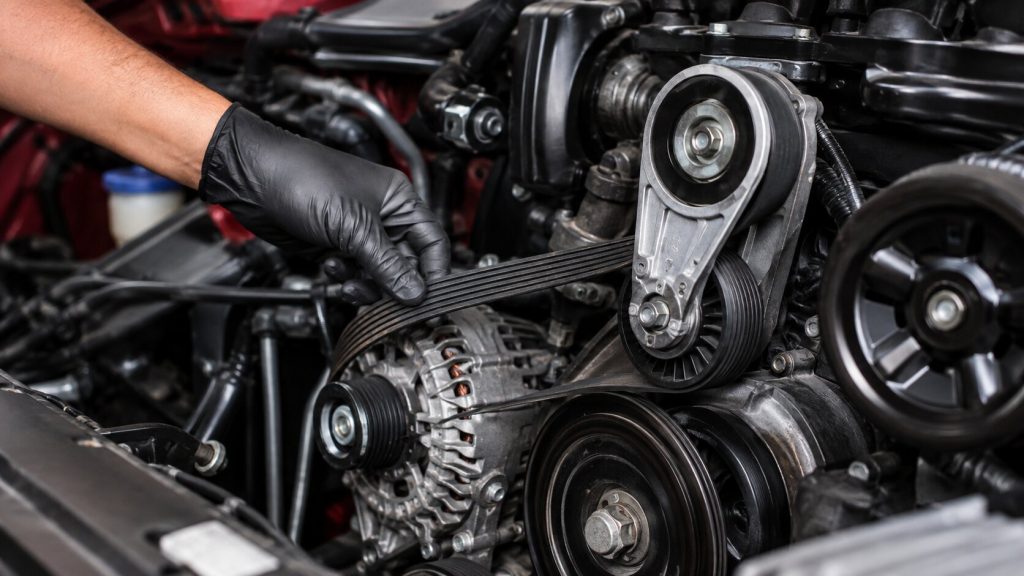
I do not judge an EPDM belt only by looking at the smooth outer surface. I inspect the working ribs, measure material loss, check the belt edges, and watch how the tensioner behaves.
A proper inspection includes the following steps.
Measuring Rib Wear
An EPDM belt wear gauge is placed into the belt grooves to check how much rib material has been lost.
The exact reading depends on the gauge being used. If the tool reaches or passes its marked wear limit, the belt is considered worn even when there are no deep cracks.
This is similar to measuring tire tread. The belt may still be intact, but it no longer has the original rib profile needed to grip the pulleys correctly.
Checking for Glazing and Rib Damage
The ribs are examined for smooth polished areas, pitting, missing rubber, and uneven wear.
Glazing can develop when the belt slips and creates excess friction heat. Missing rib sections may indicate advanced material deterioration, pulley damage, or alignment trouble.
The flat back of the belt is also checked for abnormal witness marks. These marks can reveal contact with a damaged pulley, tensioner arm, or surrounding component.
Inspecting the Belt Edges
A belt edge should remain clean and even.
Exposed cords, loose threads, or one-sided fraying usually mean the belt is not tracking correctly. Common causes include
- Pulley misalignment
- Tensioner wear
- Bearing play
- A bent bracket
- Improper belt installation
Installing a new belt without correcting the tracking problem can lead to rapid repeat failure.
Testing the Automatic Tensioner
With the engine off, the tensioner is moved through its operating range using the correct release tool.
The arm should move smoothly and return with controlled spring force. Binding, rough movement, looseness, or weak return force can justify tensioner replacement.
With the engine running, excessive tensioner-arm movement can also indicate poor damping, belt damage, pulley resistance, or an accessory-drive problem.
I also check whether the tensioner pulley runs square with the belt. Even a small alignment problem can push the belt toward one pulley edge and begin cutting into the internal cords.
Checking Pulleys and Bearings
When needed, the belt is removed so the pulleys can be turned by hand.
A healthy pulley should rotate smoothly without grinding, looseness, or side-to-side play. A dry or failing bearing may feel gritty, sound rough, or resist movement.
This step matters because a new belt cannot correct a pulley bearing that is beginning to seize.
Commonly Found in the Shop
The most misleading belt is one that looks clean from above but has already lost material inside the grooves.
I also see cases where the customer hears a chirp and assumes the belt is bad, but the actual cause is a pulley running slightly out of line. In other vehicles, the belt is worn and the tensioner is no longer controlling movement correctly.
My recommendation depends on what fails inspection.
If the belt is worn but the tensioner and pulleys operate correctly, the belt may be the only part needed.
If the tensioner binds, moves excessively, or runs out of alignment, replacing only the belt is unlikely to provide a lasting repair.
If a pulley bearing feels rough or has measurable play, that component must be addressed before the drive system can be considered reliable.
What Happens if the Belt Breaks
The result of a broken serpentine belt depends on the CR-V model year, engine, and accessory layout.
The alternator may stop charging immediately. The battery warning light may appear, and the vehicle may continue running only until stored battery power is depleted.
Other symptoms depend on which components are driven by the belt on that specific engine. Power-steering behavior and water-pump operation should not be described the same way for every CR-V generation because system designs vary.
A broken belt can also become trapped around a pulley or damage nearby components, although this does not happen in every case.
The safest response is to pull over as soon as conditions allow, shut the engine off, and have the vehicle inspected rather than continuing to drive with a charging warning light, rising temperature gauge, or abnormal steering behavior.
A Practical Inspection Before Highway Failure
A serpentine belt should be replaced when it reaches the wear limit of the measurement tool or shows physical damage such as
- Missing rib sections
- Exposed reinforcement cords
- Severe glazing
- Edge fraying
- Oil or coolant saturation
- Separation between belt layers
Age and mileage are useful service indicators, but they do not replace inspection. A lower-mileage belt can wear early because of pulley problems, while an older belt may still appear intact but fail the rib-depth test.
At Everything Automotive, owner and Master Technician Tony Mossuto applies more than 40 years of engine-performance and diagnostic experience to accessory-drive inspections. Our locations are at 7624 Beach Blvd, Jacksonville, FL 32216 or 6211 Blanding Blvd, Jacksonville, FL 32244.
We inspect the belt, measure rib wear, evaluate tensioner movement, and check pulley alignment before recommending replacement parts. Service Manager Ben Warren provides a written estimate before approved work begins.
Qualifying repairs are backed by a 36-month or 36,000-mile nationwide parts and labor warranty through the Parts Plus Car Care Center network.
Honda CR-V owners can schedule a serpentine belt inspection at the Beach Boulevard or Blanding Boulevard location before the next long I-295 commute or summer heat cycle.
We also offer specialized fleet diesel services and general car truck care to keep your vehicles on the road. Check our latest service coupons and customer verified reviews online. For major repairs, flexible financing options are available to help manage your scheduled maintenance costs.
Frequently Asked Questions
Does Jacksonville heat shorten belt life?
Yes. High ambient temperatures and continuous air-conditioning use can increase accessory-drive heat and load. Belt age, mileage, pulley condition, contamination, and tensioner performance also influence service life.
Should the tensioner always be replaced with the belt?
No. The tensioner should be replaced only when it binds, has weak spring control, develops bearing noise, runs out of alignment, or allows excessive belt movement.
Can belt noise come from another component?
Yes. Chirping or squealing may come from a misaligned pulley, worn bearing, damaged tensioner, contaminated belt, or accessory component rather than from the belt alone.
Is visible cracking the best way to judge belt wear?
No. Modern EPDM belts usually wear by losing material from the rib grooves. A belt wear gauge provides a more reliable indication than surface appearance alone.
