
Older Honda power steering problems often come from fluid breakdown, air intrusion, or pump wear. Jacksonville heat, traffic, and low-speed turns can accelerate symptoms like groaning noises and heavy steering. Proper fluid inspection and hydraulic pressure testing help identify the real cause before replacing expensive steering components.
Heavy Steering and Power Steering Pump Problems in Older Hondas
Older Honda power steering systems can develop heavy steering effort, pump groaning, and inconsistent hydraulic assist when aging fluid breaks down from heat exposure and repeated low-speed driving loads.
This issue appears frequently on older Accord, Civic, and CR-V models that experience hot parking garages, stop-and-go traffic, and frequent tight steering maneuvers. The cause is often a combination of degraded fluid, hydraulic pressure stress, and heat-related fluid performance loss rather than a failed component alone.
Before replacing any steering components, identifying the symptoms and conditions behind the failure helps determine whether the issue comes from degraded fluid, pump wear, or another hydraulic problem.
Common symptoms include
- Primary warning signs
Groaning noises during turns, heavy steering effort at idle, and a notchy or inconsistent steering feel. - Most affected components
The Honda hydraulic power steering fluid, pump assembly, reservoir screen, and related steering system seals. - Diagnostic equipment used
Hydraulic pressure testing equipment, fluid inspection tools, and temperature monitoring help determine whether the system is losing performance under heat and load. - Environmental factors that increase stress
Jacksonville summer heat, extended idling, stop-and-go traffic, and repeated low-speed parking maneuvers can increase hydraulic system stress. - Vehicles commonly affected
Older Honda Accord, Civic, and CR-V models with aging power steering fluid and original hydraulic components.
Heat and Power Steering Fluid
The hydraulic steering system depends on clean fluid to transfer pressure from the pump to the steering rack. When the fluid is in good condition, the pump can maintain consistent pressure and the steering assist remains smooth.
The problem starts when old fluid spends years cycling through high temperatures. Heat accelerates oxidation, which changes the fluid’s ability to lubricate components and control air bubbles.
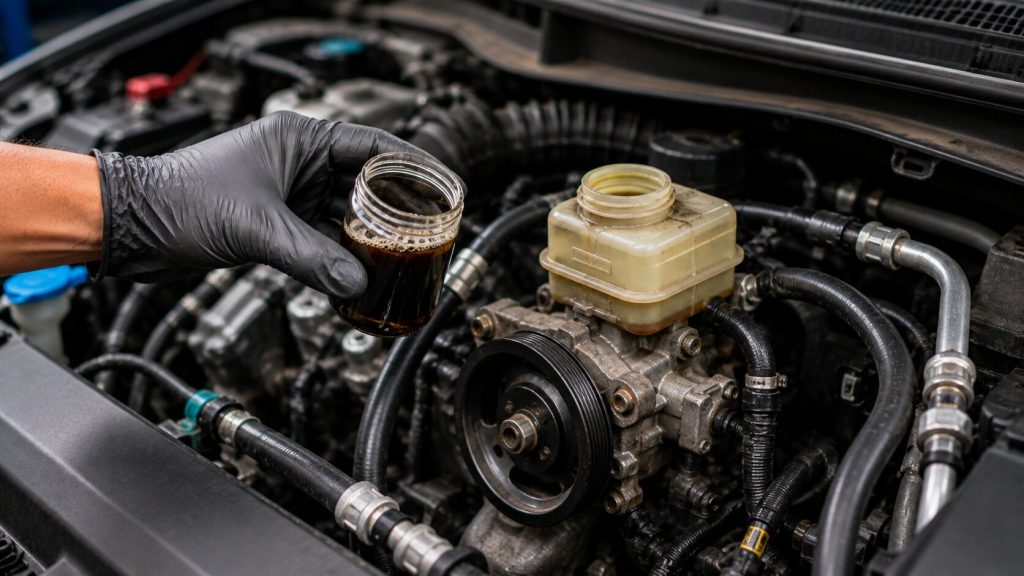
I commonly look for fluid that has changed from a clear amber appearance to a dark brown color with a burnt smell. That change is usually a warning sign that the fluid is no longer protecting the pump the way it should.
Jacksonville’s summer heat can make this worse. Vehicles sitting in concrete parking garages or idling in traffic can experience significant heat soak. During repeated low-speed turns, the power steering pump is working hard while there is very little airflow moving through the engine bay.
The result is a hydraulic system operating under stress with fluid that may no longer maintain stable performance.
How Low-Speed Turns Create High Hydraulic Load
A power steering pump experiences its highest demand when the steering wheel approaches full lock.
This happens often when:
- climbing parking garage ramps
- making tight turns in parking spaces
- maneuvering through crowded lots
- performing repeated three-point turns
During these situations, the pump continues building pressure while the steering rack reaches the end of its travel. If the fluid is degraded, the pump may struggle to maintain smooth pressure delivery.
Air bubbles can also become trapped in the fluid. Unlike liquid, air compresses under pressure. When the pump moves aerated fluid, hydraulic assist becomes inconsistent.
Common symptoms include:
- whining or groaning sounds
- steering that feels heavier after warming up
- foamy fluid in the reservoir
- inconsistent steering assist during parking
Diagnostic Process for the Steering System
A stiff steering wheel does not automatically mean the rack or pump needs replacement. The first step is confirming whether the problem is fluid-related, pump-related, or mechanical.
Fluid Condition Inspection
I start by checking the reservoir condition before recommending parts.
A healthy fluid sample should not contain:
- burnt odor
- dark discoloration
- suspended debris
- excessive foam
If the fluid appears dark or contaminated, I inspect the reservoir screen and surrounding components for signs of restriction.
A restricted screen can limit fluid supply to the pump and create symptoms that feel like a failing steering pump.
Hydraulic Pressure Testing
A pressure test is the fastest way to separate a weak pump from a fluid issue.
The system is tested at operating temperature because many failures only appear after the vehicle has heat-soaked.
A healthy Honda hydraulic steering pump should typically produce strong pressure during a brief full-lock test. If pressure drops significantly when hot or fluctuates rapidly, the system may have a worn pump, aerated fluid, or loss of fluid stability.
A cold pressure reading alone can be misleading. Some failing systems perform normally until the fluid temperature rises.
Checking for Air Entry on the Suction Side
Not every noisy pump is worn out.
The inlet side of the pump operates under suction, which means a small seal problem can allow air into the system without causing an obvious fluid leak.
I inspect:
- inlet hose connections
- sealing rings
- reservoir fittings
- signs of fluid turbulence or foam
A small air leak can create thousands of tiny bubbles that produce pump noise and reduce steering assist.
When an older Honda arrives with heavy steering and pump noise, the first question is not “Does it need a pump?”
The first question is “What is happening to the hydraulic fluid when the system is hot?”
A vehicle that has dark fluid, inconsistent pressure after heat soak, and foaming in the reservoir may have a fluid condition problem before it has a complete pump failure.
Testing the system before replacing parts prevents unnecessary repairs and helps identify whether the failure is caused by fluid degradation, air intrusion, or mechanical wear.
Protecting Your Honda Steering System
Replacing a pump or steering rack is far more expensive than catching fluid deterioration early.
For Older Honda models, regular fluid inspection and proper hydraulic testing can reveal problems before they damage major steering components.
If your Honda is showing signs of heavy steering, pump noise, or inconsistent assist after warming up, have the hydraulic system properly inspected before replacing expensive parts. Everything Automotive provides diagnostic testing for power steering concerns, including fluid condition checks, pressure testing, and component evaluation to identify the actual cause of the failure. Visit Everything Automotive at 7624 Beach Blvd, Jacksonville, FL 32216 or 6211 Blanding Blvd, Jacksonville, FL 32244 for a proper inspection and get a clear repair recommendation based on testing, not guesswork.
Frequently Asked Questions
Does old power steering fluid make a Honda harder to steer?
Yes. Old power steering fluid can make steering feel heavier, especially during parking or slow-speed turns. As the fluid breaks down from heat and age, the pump may not maintain smooth hydraulic pressure, which can lead to groaning noises and inconsistent steering assist.
How can I tell if my Honda power steering pump is going bad?
A failing power steering pump usually gives warning signs before it completely fails. Common signs include a whining or groaning sound while turning, steering that gets heavier after the vehicle warms up, and fluid that looks dark or smells burnt. A pressure test can help determine whether the pump is actually failing or if another issue is causing the symptoms.
Can hot Jacksonville weather affect Honda power steering systems?
Yes. Heat can speed up power steering fluid breakdown and make existing problems show up sooner. Vehicles that spend time idling in traffic, sitting in hot parking garages, or making repeated low-speed turns put more stress on the hydraulic system.
Should I replace the power steering pump if it starts making noise?
No. A noisy pump does not always mean the pump itself is worn out. Low fluid condition, air entering the suction side, or a restricted reservoir screen can create similar symptoms. Testing the system first can prevent replacing a pump that was not the actual problem.
How often should Honda power steering fluid be checked?
Honda power steering fluid should be inspected during routine maintenance, especially on older vehicles. If the fluid is dark, smells burnt, or contains foam or debris, it is worth having the system inspected before the pump or steering rack suffers additional wear.
